
Lithium for Treating Addiction
Dr. Sudhir Gadh's published study on improvements in patient resilience and recovery with nutritional lithium in an addiction treatment setting.

Low-Dose Lithium for Substance Use Disorders
Transforming Addiction Treatment and Recovery: The Promise of Low-Dose Lithium

Patient Resilience and Recovery with Nutritional Lithium
In the realm of substance use disorders, innovative approaches are continually reshaping our understanding of effective treatment and recovery strategies. One such method gaining attention spotlights Dr. Sudhir Gadh’s published study showing measurable improvements in patient resilience and recovery with nutritional lithium prescribed in an addiction treatment setting. Low-dose lithium carbonate, administered at a dosage of 150 mg, is emerging as a vital resource for mental health professionals in residential addiction treatment centers. A nutritional Lithium regimen not only targets the addiction itself but also shows encouraging gains in psychological resilience and overall improved mental health, particularly for individuals dealing with co-occurring disorders. Administering low-dose lithium as either an enhancement to existing therapies or as an alternative to conventional synthetic antidepressants and anxiolytics has consistently demonstrated favorable outcomes.
Low-Dose Lithium for Simplifying Medication Regimens
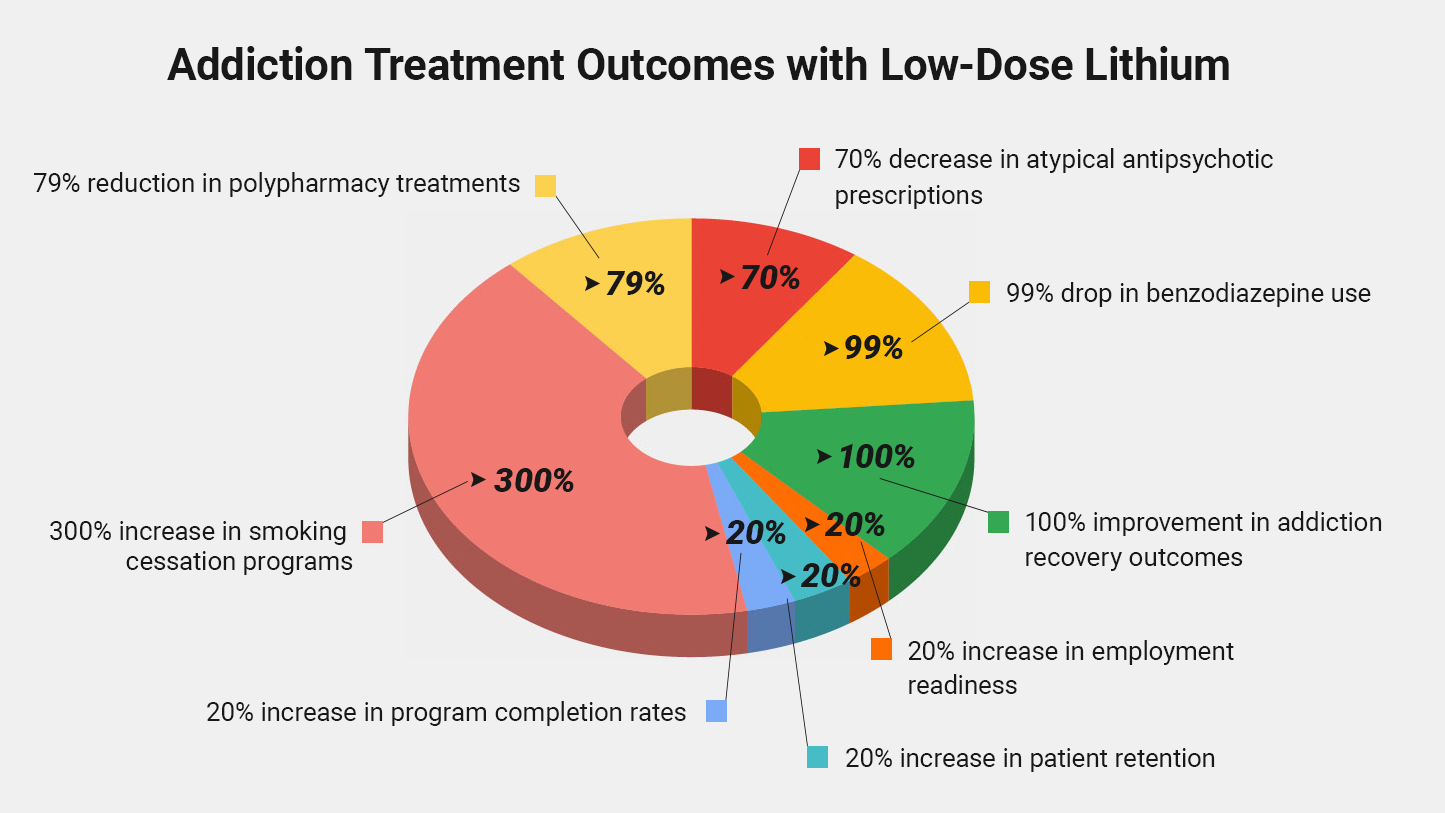
The findings from Dr. Gadh’s study paint an encouraging picture. Patients receiving low-dose nutritional lithium showed significant improvements in their medication usage. For instance, there was a 50% reduction in the average dose of Medication-Assisted Treatment (MAT) for opiates, a dramatic 99% drop in benzodiazepine use, and a substantial 70% decrease in atypical antipsychotic prescriptions. Additionally, the therapy contributed to a remarkable 79% reduction in polypharmacy, thereby simplifying patients’ medication regimens. Encouragingly, participation in smoking cessation programs increased by 300%, indicating significant gains in patient motivation and adherence to holistic well-being. Beyond individual medication trends, the study showed improvements within the treatment clinic as a whole. The average patient census rose by 10%, and retention rates improved by 25%. Notably, both employment readiness and actual employment rates doubled, with overall program completion rates climbing by 20%. The most striking statistic is that the completion rate among those utilizing low-dose lithium nearly doubled, demonstrating its potential to improve recovery outcomes. Importantly, researchers noted no significant changes in standard laboratory measurements, reinforcing the treatment’s safety profile.
Treating Addiction and Underlying Conditions
The integration of low-dose lithium into addiction treatment programs signals key advances in effectively treating substance use disorders while also potentially addressing underlying challenges patients face, such as trauma and untreated ADHD. With tangible improvements, patients persevere in their recovery efforts, empowering them to maintain progress in their recovery journeys. As we look ahead, the potential to develop safer and more effective treatment options offers renewed hope to many individuals striving to break free from addiction and substance use disorders. With appropriate support and groundbreaking strategies, a brighter future in the recovery landscape is not just a possibility—it is within our reach.
Treating Addiction and Underlying Conditions
The integration of low-dose lithium into addiction treatment programs signals key advances in effectively treating substance use disorders while also potentially addressing underlying challenges patients face, such as trauma and untreated ADHD. With tangible improvements, patients persevere in their recovery efforts, empowering them to maintain progress in their recovery journeys. As we look ahead, the potential to develop safer and more effective treatment options offers renewed hope to many individuals striving to break free from addiction and substance use disorders. With appropriate support and groundbreaking strategies, a brighter future in the recovery landscape is not just a possibility—it is within our reach.